Lab Members
Current Members

Margie Knight: Margie is a PhD Candidate in the Mathematics Department. She is investigating the collective behavior of small organisms in fluid environments, specifically looking at how microorganisms interact with filter-feeders like jellyfish and corals. Additionally, she is developing epi-socio-economic models aimed at highlighting societal consequences during and after a large disease outbreak. To learn more about Margie’s research and teaching experiences, check out her website here!

Melissa Pulley: Melissa is just getting started with her research. She is working as a GRA studying the transmission of mastitis-causing pathogens in dairy cows with funding from UTIA. Other projects she is looking into include integrated pest management for ticks and extending Kimberlyn’s work on parasitoid wasps to include more realistic behavioral responses to certain key environmental conditions.
Former Members
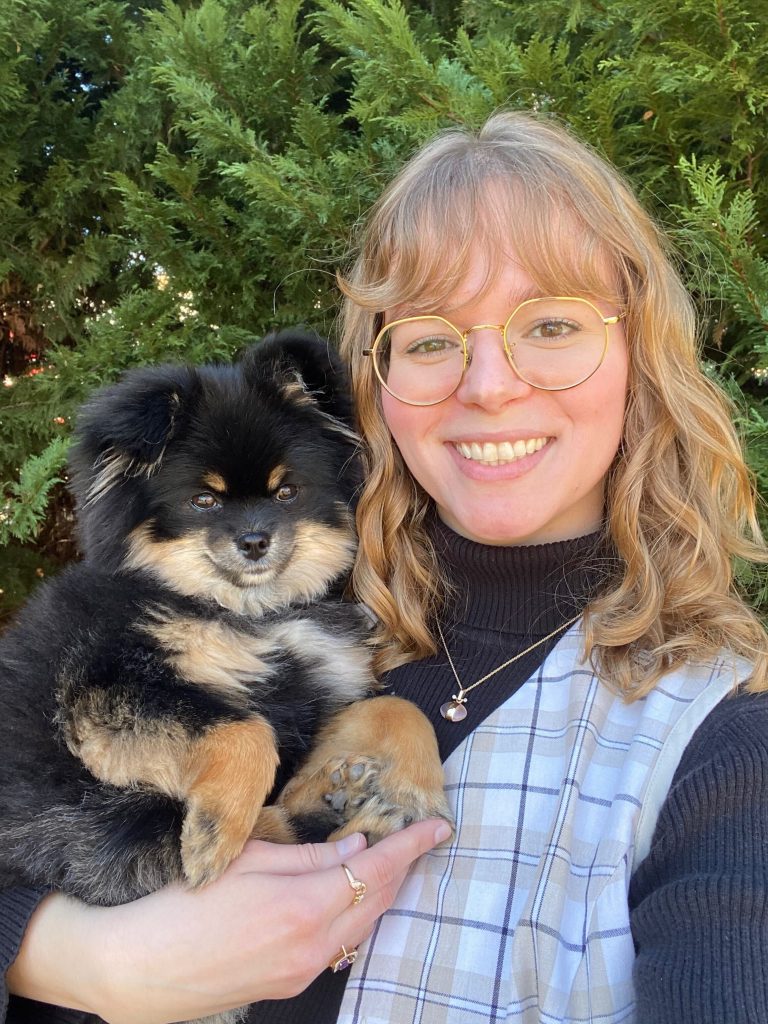
Kimberlyn Eversman: (Veterans United, 2026) Kimberlyn received her PhD in 2025 with research on two projects. In the first, she utilized a two-part compartmental model of substance use disorder epidemiology to better understand opioid use and overdose dynamics in the context of a vulnerable subpopulation and the surrounding community. This work was conducted in collaboration with Oak Ridge National Laboratory and funded by the Veterans Administration. Her second project focused on parasitoid wasps and the crucial role they plan as agricultural biocontrol agents. The interaction of these wasps with their tiny hosts in the setting of full agricultural fields is a challenging multiscale problem, and she tackled it by developing a coupled, two-dimensional spatial-temporal model to simulate the dispersal of both the parasitoid wasps and their hosts. This involved probabilistic modeling, a finite-difference approximation for a coupled PDE system, and incorporating half-hourly wind velocity data from a first-release experiment in Australia.

Ryan Campbell: Ryan received his PhD in 2026 studying the probabilistic properties of intermittent search strategies. Applications include tiny wasps seeking out other small insects in a very large area. Since 2023, he also collaborated with Oak Ridge National Lab on a Veterans Administration funded project developing individual-based models of community structure in the context of opioid use disorder. Ryan brings many mathematical tools together to analyze these problems, including probability theory, stochastic differential equations, mathematical and probabilistic modeling, complex systems modeling, networks, and partial differential equations.

Martina Bouka: (PhD program at Charite Medicine University, Berlin Germany) Martina received her MS in 2024 conducting research on information feedback delays within epidemic models and their effects on model dynamics. She is pursuing a PhD in epidemiology.
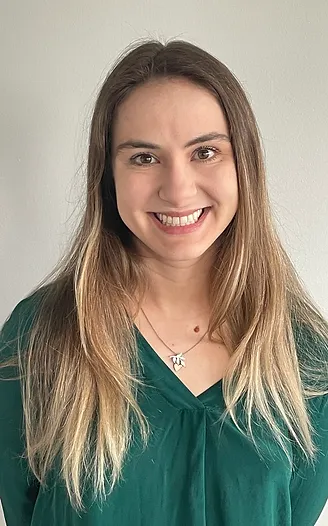
Leigh Pearcy: (Postdoc at the University of Pittsburgh, 2023) Leigh received her PhD in Mathematics and an MS in Statistics in the summer of 2023. Her dissertation explores the effect of stratification in susceptibility with regard to opioid and alcohol use disorders, structural stability and optimal control results for generalized substance use disorder epidemiology models, cellular automaton approaches to modeling individual-level interaction in the context of substance use disorders, and Bayesian analysis of circadian variation in sudden death. Leigh is now applying her skills toward the field of psychiatry while continuing to make important contributions to the development of mathematical models of substance use disorder.
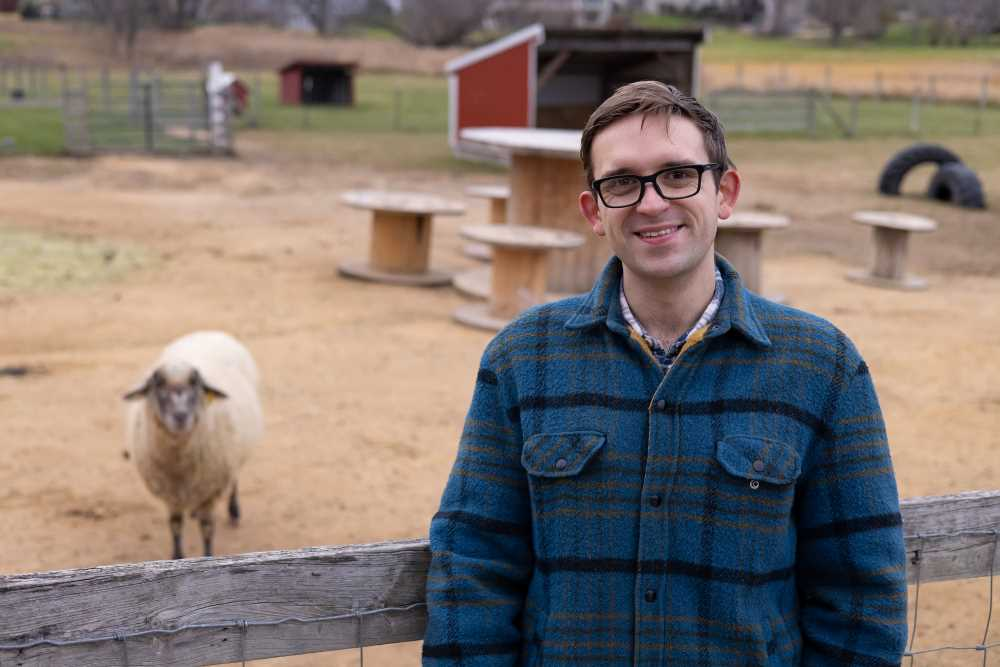
David Elzinga: (Assistant Prof. at University of Wisconsin, LaCrosse, 2023) David received his PhD in Mathematics and an MS in Statistics in 2023. His dissertation explores stratified social bee colony dynamics in the presence of generalized agricultural stressors, the dynamics of the winter tick epizootic in moose under the effects of climate change, ODE and spatial CTMC models of orf outbreaks on ruminant farms with Bayesian model fitting, and Bayesian analysis of circadian variation in sudden death. He has also published papers on the sylvatic plague in prairie dog towns (Natural Resource Modeling, 2020) and vaccination strategies to control white-nose syndrome in bat colonies (Ecological Modelling, 2019), and he has experience working as an intern in the area of machine learning.

Tricia Phillips:(Assistant Prof. at Birmingham-Southern College, 2020; now an Assistant Professor at the University of Alabama, Birmingham) Tricia received her PhD from the mathematical biology program at the University of Tennessee, Knoxville in 2020. For her dissertation, she built and analyzed models of opioid and heroin addiction and a discrete-time model of population structure in non-lethal harvest scenarios. Both projects were highly data-driven and involved significant computational aspects.
Former Undergraduate Researchers
Koee Chapman, Tyler Hall, and Anirudhha Harsha: Through Knox Math Lab, these students worked with Margie Knight to examine the effect of plankton collective behavior on jellyfish predation using the Planktos agent-based modeling framework developed by Dr. Strickland. We hope to have some of their results published later in 2026! If you are an undergraduate who is interested in joining the Strickland lab, be sure to check if there are current opportunities through Knox Math Lab!
Owen Queen: (Research Assoc., Harvard Medical School, 2023; Stanford Computer Science PhD Program, 2024): Owen is a mathematics and computer science major studying agent-based models of opioid and heroin addiction on social networks. He uses a combination of mathematical modeling, Python- and NetLogo-based computation, and statistical analysis carried out in R to conduct his research. Owen Queen is a 2021 Goldwater Scholar and a 2024 Knight-Hennessy Scholar.
Vincent Jodoin: (Teacher, Farragut High School, 2021; now a PhD student at UTK under a different advisor) A mathematics major, Vinny helped formulate and implement a novel agent-based model for opioid and heroin addiction which acts on social networks in NetLogo. He is interested in teaching and now is a PhD student in the mathematical biology concentration at the University of Tennessee, Knoxville.
Ao Zeng: (Carnegie Mellon School of Computer Science Master’s Program, 2017) Majoring in mathematics and computer science, Ao implemented novel network formation algorithms in Python. His focus is on efficient routines and data structures within a scalable, object-oriented framework for model testing.
James Zak: (KPMG International Limited, Strategic Profitability Insights group, 2018) Majoring in mathematics and mathematical decision sciences, James successfully defended his honors thesis with highest honors. His focus is on the mathematical analysis of random networks and how they compare to real networks in technological and social contexts.