• Request Info
  • Visit
  • Apply
  • Give
  • Request Info
  • Visit
  • Apply
  • Give

Search

A-Z Index Map

Mathematics

  • About
    • Assessment Plan
    • Mission Statement
    • Newsletter
    • Open Jobs
    • SharePoint Site
  • People
    • Administration
    • Faculty
    • Visiting Scholars
    • Graduate Students
    • Staff
    • In Memoriam
  • Undergraduate
    • Major/Minor/Honors
    • Scholarships
    • Careers
    • Math Placement
    • Testing Support Center
    • The Math Place
  • Graduate
    • Degree Programs
    • Funding & Assistantships
    • Request Information
    • Application Checklist
    • Apply Now
    • Handbook
    • MGSC
  • Research
    • Faculty in Research Areas
    • Grants
    • Labs
  • Alumni and Friends
    • Connect with Us
    • Recent PhDs
    • Board of Visitors
  • Events and Visitors
    • Calendar
    • SIAM SEAS 2025
    • Barrett Memorial Lectures
    • Honors Day 2025
Home » Page 3

Archives

Graduate Program Development

May 15, 2024 by Logan Judy

The UT mathematics graduate program awarded 28 Graduate Teaching Assistantships (GTAs) to new students in fall 2022, bringing the total number of GTAs in the program to 88. Grants and fellowships supported an additional nine students. Including our self-supported students, we currently have over 100 graduate students in our program.  Going forward, the department aims to increase the number of supported GTA lines to 100, which has already been approved by the college. This represents substantial growth over the last few years. 

The department awarded 12 PhD, 19 MS, and 15 MM degrees in 2022-23. Our students accepted jobs in the academia, industry, and government offices, including the Department of Defense, ORNL, Eastman Chemical, Austin Peay State Univ, and various post-docs.  

The Master of Mathematics (MM) program was established in the 1960’s by UT mathematics faculty to support teachers by expanding the breadth and depth of their mathematical training. In recent years the MM degree has moved to a fully online program and is seeing increased growth with enrollment of teachers from across the country. This past year, 15 students earned their Master of Mathematics degrees.

Our graduate students are involved with a variety of organizations. They hold positions within the Association of Women in Mathematics (AWM), Society for Advancement of Chicanos/Hispanics & Native Americans in Science (SACNAS), and Society for Industrial and Applied Mathematics (SIAM). These local chapters participate in a range of activities from organizing events, conferences, and workshops; giving presentations; and traveling to events sponsored by these organizations.

The graduate program is also proud of the diversity of students we have from around the world: we have recently welcomed students from Bangladesh, China, Columbia, Germany, Greece, India, Italy, Nigeria, Pakistan, Saudi Arabia, United Kingdom, and Vietnam. We are currently recruiting students for fall 2023. Four of our prospective students recently received endowed fellowships from the Graduate School, including Andrew Gannon, who has accepted a J. Wallace and Katie Dean Graduate Fellowship, and Sunday Bulus, who has accepted a Rowland Family Scholarship.

About nine years ago, the Math Graduate Student Council (MGSC) was created to represent all math graduate students and to help communicate with the department administration. This organization is composed of students elected by their peers from within the department. These students organize professional development events, graduate student group outings, and act as a liaison between the students and the departmental administration. They also host our annual apparel sale where a design, usually created by one of our students, is put on a shirt, hat, etc., and then offered for sale to the department.

Another positive development is that, thanks to the new budget model (i.e., BAM), the college has decided to give both incoming and existing graduate students a relatively large pay raises in FY2024, this will have a significant positive impact on the department’s graduate student recruiting and on student well-being and morale. The department appreciates the college’s continuing support for and investment in our graduate students.  

Filed Under: Newsletter

Enhancing the Major-Minor Experience

May 15, 2024 by Logan Judy

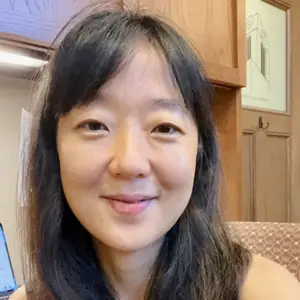
Kristina Wilson headshot photo

During the past couple years, we’ve been working to enhance the experience for our math majors and minors by promoting career development, research opportunities, and community.

To provide space for more career conversations, we created a new 1-credit course to explore opportunities and resources for a math major at UT as well as career directions. For me, the highlight of the course are the amazing alumni speakers who share their experiences and advice with our students.  

Last fall we also launched our new Math Major Alumni Spotlight program to showcase our math alumni and the variety of career paths they have taken. Our fall 2022 spotlights featured Margaret McDaniel, who is an immunology researcher at University of Washington, Kelly McKeethan, who is a Senior Actuary at Frontdoor, and Helene Rodzevicius, who is Assistant Vice President and Credit Analyst at Mountain Commerce Bank.  (If you are a math major alum who would like to participate, please get in touch!)

To promote community, we host a weekly math major social hour. This event has really taken off this year now that covid restrictions have eased and we are able to provide food. We’re also creating opportunities for mathematical fun, such as sending a team of math majors to compete in a math jeopardy competition at a regional conference.  

Further, our new UT Puzzler debuted this fall, which is a biweekly problem solving challenge open to anyone at the university. So far, we’ve had submissions from 40 different students, with math major Philip Rosenbalm leading the pack with a correct solution to every UT Puzzler so far. Try your hand at the first UT Puzzler below.

Lastly, we continue to promote undergraduate research in mathematics. This semester, thanks to funding from the Office of Undergraduate Research, we offered a paid position to Kristina Wilson (see photo) as the spring 23 math department research assistant. She is working with Professor Ioannis Sgouralis to develop specialized numerical integration schemes for machine learning and the analysis of biochemistry data.

Filed Under: Newsletter

Moving Forward

May 15, 2024 by Logan Judy

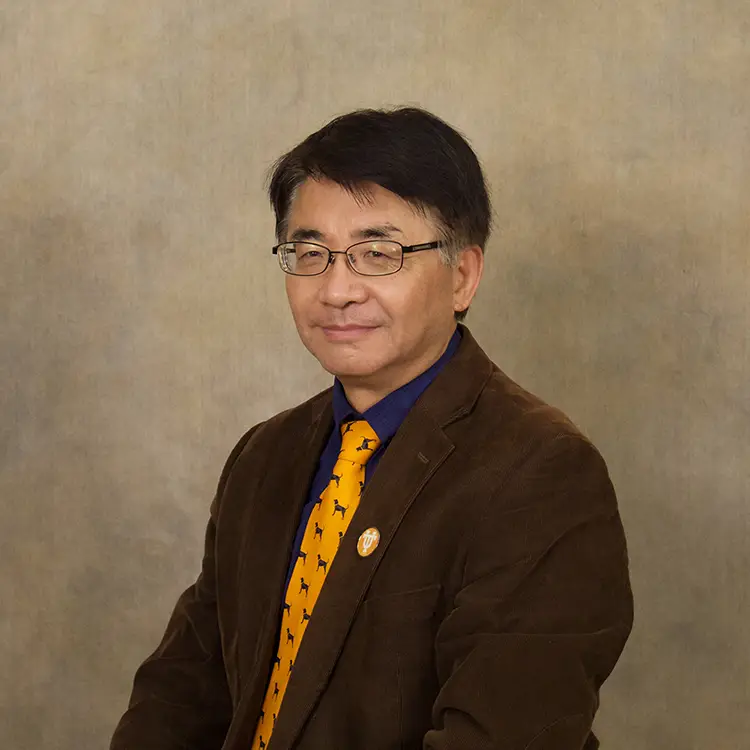
Xiaobing Feng

One year ago, the mathematics department at UT was in the process of searching for a new department head. It was a great honor for me to be given the opportunity to serve the department in the headship role after being at UT for almost thirty years. Now, after almost eight months since becoming the department head on August 1, 2022, I would like to take a moment to update everyone on some recent developments and events in the department, as well as look forward to where we might be heading.

Teaching is one of the primary responsibilities and missions of the mathematics department, as we teach the entire campus with an enormous number of credit hours. Due to record enrollment, our teaching manpower was stretched beyond our limit in fall 2022. However, with some creative measures and assistance from the dean and provost, the department was able to manage the crisis and ensure that every student was taught without one left uncovered. The department is in better shape in spring 2023, and with many new TT/T and non-TT faculty joining our department in fall 2023, the future looks bright.

Another primary responsibility and mission of the math department in a flagship university like UT is training and advising graduate students. Currently, the department has 88 graduate teaching assistant lines in spring 2023. Thanks to the college’s support, that number will grow to 100 in fall 2023. However, the large influx of new graduate students puts a significant pressure on the department, specifically the TT/T faculty, to direct them and fulfill our commitments to those students, and mentor them to become competent instructors to teach for the university. With the help of a group of dedicated faculty members, the department was able to develop a new GTA Teaching Advising Program that improves/replaces the eight-year-old GTA Mentorship Program. The pilot experience in fall 2022 showed that the new program largely works well, and further tweaks and improvements will be implemented in fall 2023, so the future looks bright.

Research is another primary responsibility and mission of the math department, and many of the faculty cherish and are proud of it. Most of the TT/T faculty have been actively pursuing scholarly research via publications and presentations, and many have been supported by external grants. About 43% of the faculty had external funding in 2023FY, which is up from 31% in FY2021, a great improvement. Among many bright spots, perhaps the brightest was the success of a multi-million-dollar UT cluster hiring proposal on Science-Informed AI, a multi-college and multi-department effort led by Professor Vasileios Maroulas. This is the only winning proposal by the College of Arts and Sciences in the competition and provides critical faculty lines and resources that potentially will put the UT on the map as a leader in AI and machine learning research. Along with the continuous strong traditional mathematical research output of the department, the future looks bright.

Over the past few years, the TT/T faculty of our department has experienced a significant decrease due to retirements and resignations. However, I am pleased to report that the trend has stopped at the end of FY22, and we have made progress. With the support of the college, we were able to conduct three successful TT faculty searches in FY 2023, filling positions in mathematical biology, probability, and topology. I extend my gratitude to the search committees for their hard work and to the committee chairs (Professors Suzanne Lenhart, Jan Rosinski, and Mike Frazier) for their excellent leadership. Additionally, we are already in the process of hiring two senior tenured faculty members through the Science-Informed AI cluster, and the college has approved our request for eight new non-TT faculty positions. In conjunction with previously approved but unfilled positions, we are currently searching to fill 12 non-TT faculty positions. These developments will significantly increase and improve our department’s manpower. With expected changes to take effect in fall 2023 and beyond, the future looks bright.

While shared governance requires our faculty to perform various service responsibilities for the department, college, university, and profession, it is unfortunate that the trend for service load is increasing. This means our faculty will likely carry heavier service responsibilities in the future. Balancing teaching, research, advising, and services will continue to be a challenge, and this challenge may increase.

Our dedicated staff plays a critical role in keeping the department running smoothly, and the COVID pandemic has made us even more appreciative of their services. I would like to take this opportunity to thank our staff for their ongoing support to the faculty, students, and university.

For the first time in over five years, our department will be publishing a newsletter. With COVID behind us and a gradual return to normalcy, we hope the newsletter will serve as a means to connect with all of you and enable us to tell our story to the university community and beyond.

Xiaobing Feng

Filed Under: Newsletter

Our Honor Students

May 15, 2024 by Logan Judy

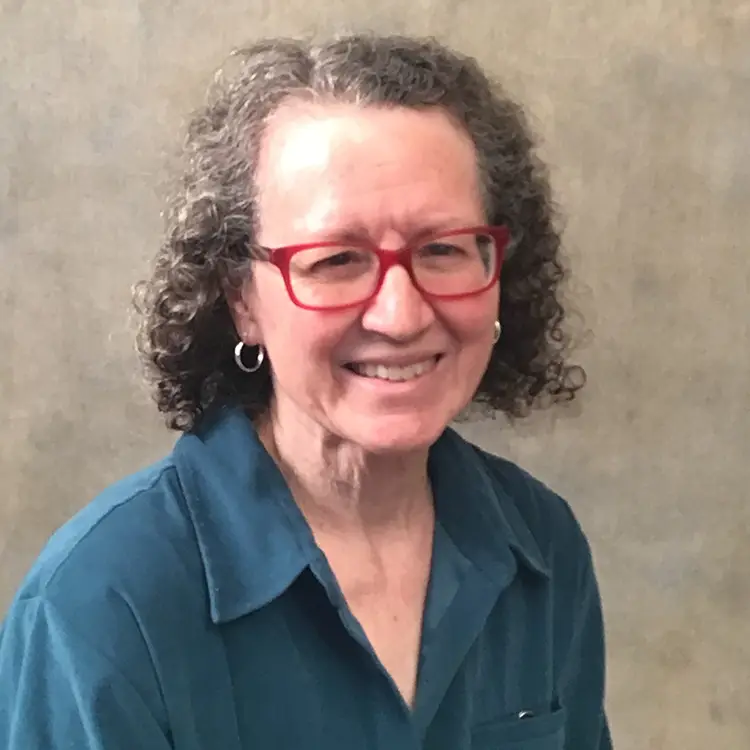
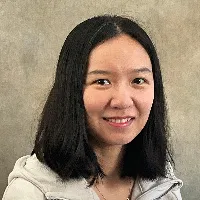
Ye He headshot photo

Ye He is a senior mathematics student in the math honors concentration. After consulting with her professors in her sophomore year, Ye switched to the mathematics major from her previous major in electrical engineering. This allowed her to pursue high-level mathematics classes such as topology and abstract algebra. 

“In these higher-level math courses, I was trained to solve more complicated and abstract problems, which I think is beneficial to develop my problem-solving skills as well as mindset.” 

Ye wrote her honors thesis under the supervision of Professor Joan Lind, on the topic of Spanning Trees in Graph Theory. After graduation, Ye plans to continue with a doctoral degree in statistics. She already has several offers from excellent universities.


Gesa Nestler headshot photo

Gesa Nestler is a senior mathematics student in the honors concentration, with a minor in physics. In her four years at UT, Gesa had the chance to take a wide range of courses including graduate level sequences in analysis and algebra. She was also very active in research, and was awarded a Summer Undergraduate Research Experience at Pomona College. Her poster on Galois Groups of Fields Generated by Points of Curves, which was based on her summer research, was awarded an Honorable Mention at the MAA MathFest 2022 in Philadelphia. During the past year, Gesa wrote an honors thesis on modular forms and knot theory under the supervision of Professor Marie Jameson. 

“Something I would like to say about my academic experience at UT is that my teachers were very approachable and dedicated to helping students understand the course material, and this really helped me in my classes and prepared me for my Undergraduate Research Experience.” 

After graduation, Gesa will pursue a doctoral degree in mathematics at Duke University.


Spencer Catron headshot photo

Spencer Catron is a senior mathematics student in the honors concentration. Spencer started taking classes at UT while still in high school, being one of our top students in 300-level courses. During his undergraduate career at UT, Spencer took very advanced mathematics courses, including 600-level graduate courses. He also worked on research in math biology under the mentorship of Professor Suzanne Lenhart, and later wrote a thesis in differential geometry under the supervision of Professor Theodora Bourni. After graduation Spencer will pursue a doctoral degree in mathematics.

“My most memorable experiences were taking the honors analysis sequence and the graduate real/complex sequence my freshman and then sophomore years. These courses were the first times I experienced problems that the proofs were not necessarily natural or easy. Most of the problems were, in fact, quite the opposite. This was the case especially for the graduate sequence taught by Dr. Vellis. There were many nights that spring sophomore semester I remember not sleeping because I got caught up in the homework problems. I remember completing homework that I thought were perfect to receive 4/10s and so on. This is all to say that these sequences humbled me by quite a large bit, and I appreciate them for that. You do not really know who you are until you hit a brick wall.  I would also like to say that I am really going to miss this department. I have thoroughly enjoyed the professors and students that I have grown close to these last few years. You all will remain in my heart always.”


Filed Under: Newsletter

Math’s Crucial Mission

May 15, 2024 by Logan Judy

Ayres Hall

The mathematics department at the University of Tennessee, Knoxville, has a crucial mission to impart mathematical knowledge and skills to every UT student. This mission is integral to the academic success of students across all disciplines, as mathematics forms the foundation of many fields of study. In recent years, the department has taken several significant steps to fulfill this mission.

One of the most notable developments has been the record enrollment in lower division math classes. In fall 2022, the department saw an increase of approximately 1,700 students taking math classes, with Math 119 and Math 123 experiencing the largest increase. This surge in enrollment has been met with exceptional efforts from the math lecturers who have stepped up to teach additional classes. This increase in enrollment highlights the importance of mathematics education, and the mathematics department is committed to continue providing the best possible instruction to UT students.

To further support its teaching mission, the mathematics department has launched a new program, the GTA (Graduate Teaching Assistants) Teaching Advising Program because almost all mathematics graduate students teach part-time for the department and university. The program aims to provide guidance and advising to GTAs in the department and equip them with the necessary tools, techniques, and pedagogies to enhance their teaching abilities and engage with students in a more meaningful way. By empowering GTAs, the department can improve the overall quality of instruction and enhance the learning experience for UT students.

Additionally, the mathematics department has collaborated with the College of Engineering to develop new 200-level math courses tailored to engineering students. This partnership is a significant step forward in enhancing the interdisciplinary learning experience for UT students. The pilot course is currently offered in the spring 2023 semester and will equip engineering students with the necessary mathematical skills to succeed in their field. By tailoring courses to specific disciplines, the mathematics department is demonstrating its commitment to providing relevant and practical instruction to students across all majors.

In conclusion, the mathematics department plays a critical role in ensuring that every UT student acquires essential mathematical knowledge and skills. The department has taken significant steps to fulfill this mission, including an increase in enrollment in lower division math classes, launching the GTA Teaching Advising Program, and collaborating with the College of Engineering to develop new math courses. These efforts demonstrate the department’s commitment to providing high-quality instruction and preparing UT students for academic success. 

Filed Under: Newsletter

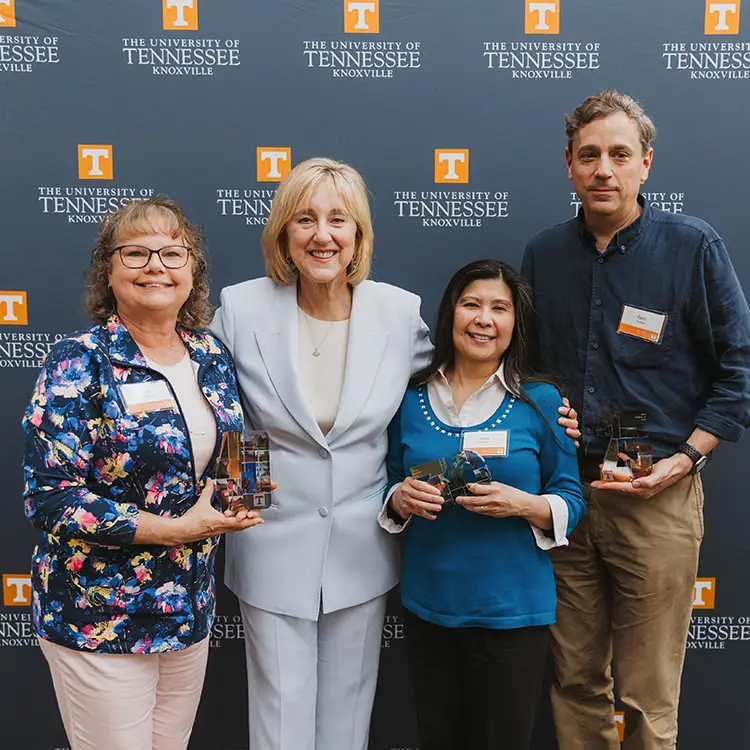
2024 Professional Promise in Research and Creative Achievement

May 10, 2024 by Ben Walker

Olivia Feldman receives Chancellor’s Honor.

Dr. Olivia Feldman (formerly Prosper) is an Associate Professor of Mathematics working at the interface of mathematics and biology, with a focus on infectious disease modeling. She earned her Ph.D. in Mathematics from the University of Florida in 2012, which was followed by a postdoc at Dartmouth College. In 2021, Dr. Feldman received an NSF CAREER grant and Intercollegiate Biomathematics Alliance Excellence in Research award.

What does being a Volunteer mean to you? How has UT empowered you to make a difference in a way you might not have imagined elsewhere?

“I am grateful for the mentors throughout my life and career who have contributed to my success in unique ways. Being a Vol means passing that on to the next generation of students at the University of Tennessee, and using my skills to give back to my community. At UT, I’ve had the opportunity to engage non-STEM students in quantitative work outside the classroom. Observing the creativity spurred from that venture inspires me to continue seeking mathematical potential where it may be overlooked.”

See all the 2024 award recipients here.

Filed Under: Featured

Model Modern Mathematician

May 9, 2024 by Logan Judy

Headshot photo of Kristina Wilson

by Randall Brown

Mathematics major Kristina Wilson of Athens, Tennessee, graduates this spring as an honors student who has excelled in her academic coursework and research projects, succeeding in both honors-level and graduate courses.

“My time as a Volunteer has been memorable because UT and the math department have provided me with opportunities to learn and develop as a mathematician in a supportive environment,” said Wilson. “The math professors at UT are encouraging of their students. They are so passionate, and they want students to learn math and share their passion too.”

Wilson engaged in multiple research experiences as an undergraduate Vol, including initiating a summer project mathematically modeling infectious disease with Associate Professor Olivia Feldman in summer 2022.

“Over the course of three semesters, Kristina far exceeded my expectations in my Junior Modelers Program, JuMP, both as a participant and a leader,” said Feldman. “She demonstrated the ability to collaborate and mentor effectively and work diligently on new and challenging quantitative problems related to mathematical epidemiology.”

After the first session of JuMP, Wilson and a student colleague in computer science proposed and co-authored a paper on modeling research as a summer research project—an impressive achievement for an undergraduate student.

“I was blown away by her ability, along with her partner, to advance this project from week to week through her own initiative and thirst to learn new skills,” said Feldman. “Kristina’s genuine passion for learning challenging things made her a joy to work with.”

During spring 2023, Wilson worked as an undergraduate research assistant with Assistant Professor Ioannis Sgouralis to develop specialized numerical integration schemes for machine learning and the analysis of biochemistry data.

“Kristina is an exceptionally bright student whose aptitude for addressing applied science problems truly stands out,” said Sgouralis. “Her proficiency extends beyond her impressive mathematical capabilities; she is also an accomplished computer scientist.” 

Wilson integrated her methodical mathematical background with her programming skills to link theoretical models with empirical observations and simulate the appearance of complex datasets. 

“Her work is also communicated with clarity, which underscores her deep passion for cross-disciplinary research,” said Sgouralis.

Wilson also worked on a summer research project implementing routines in a matrix algebra library. She collaborated with visiting students from the City University of Hong Kong and the Chinese University of Hong Kong through UT’s National Institute for Computational Sciences.

“I’ve spent a lot of time on this project, and it has helped me improve my math and computer science skills further,” she said.

Throughout her time at Rocky Top, Wilson has enjoyed great camaraderie with her fellow math students. 

“We work together really well,” she said. “When we work in groups, it’s not a competition of who can look the smartest or have the best idea, it’s about getting the problem done together. This environment at UT has allowed me to learn and figure out what I’m passionate about and has allowed me to pursue my interests.”

After graduation Wilson is headed for Nashville to pursue her PhD in mathematics at Vanderbilt University. Her advice for future Vols is to maintain a Big Orange balance in their studies and campus life.

“College will be stressful, challenging, and gratifying,” said Wilson. “Don’t forget to enjoy the good parts too.”

The College of Arts and Sciences congratulates Kristina Wilson for graduating with her successful record of research projects and representing her Big Orange pride and confidence with her in future endeavors.

Filed Under: Featured

Salgado Recognized for Excellence in Research

March 27, 2024 by Logan Judy

On behalf of Abner Salgado, Xiaobing Feng receives the award from Michael Blum at the 2023 Faculty Awards Convocation.

Abner Salgado, professor of mathematics, received the Excellence in Research & Creative Achievement Award for Mid-Career Faculty at the 2023 College of Arts and Sciences Faculty Convocation. 

Salgado received his PhD from Texas A&M University in 2010 and joined the faculty of UT in 2013 after finishing his postdoc at the University of Maryland with research in numerical analysis. He is a very talented numerical analyst, one of the best in the country in his generation.

During the past  10 years at UT, Salgado’s research has focused on the design and analysis of efficient yet accurate computational algorithms for solving PDEs which describe fractional diffusion and complex fluids. He is a world leader in these areas and has been invited to deliver plenary presentations in the country and around the world. Salgado has a phenomenal record of research productivity, with over 80 publications and many of them have appeared in the most prestigious journals in his research area. His research has been continuously supported by NSF in the past 10 years.

In 2022, Salgado and his UT colleague Steven Wise published a mammoth textbook—almost 1,000 pages—titled Classical Numerical Analysis: A Comprehensive Course, by Cambridge University Press. The book received very good reviews.

Filed Under: Featured

Bourni Opens International Connections for Geometric Flow

February 9, 2024 by Logan Judy

Headshot photo of Theodora Bourni

A UT Department of Mathematics professor’s collaboration earned National Science Foundation (NSF) support and created an opportunity for a group of Vol graduate students and others to connect internationally with experts on the forefront of mathematics.

Associate Professor Theodora Bourni coordinated with Professor Martin Reiris of Uruguay’s Universidad de la República to organize the Geometric Flows and Relativity school and workshop March 11–20, 2024, in Uruguay.

The two-part meeting will feature a week-long summer school in Montevideo, Uruguay, followed by a three-day workshop in nearby Punta del Este. The school will provide attendees first-hand access to current research in geometric flows, a powerful tool in the analysis of many important problems in differential geometry, image processing, and mathematical physics, with a profound impact on each of these fields.

The event grew from smaller-scale classes Bourni and Reiris previously presented in Uruguay, and similar classes Bourni presented over the years in Greece, where she is from.

“We did a kind of mini-course, and a lot of local students attended it,” said Bourni. “So, we said, ‘Let’s try something bigger.’”

Reiris secured local funding in Uruguay to get their plan established, then Bourni sought the NSF grant to expand the potential for attendance from US schools and to invite participation from international scholars. The roster of invited lecturers includes Mat Langford of the Australian National University, Mariel Sáez of the Pontífica Universidad Católica de Chile, and Julian Scheuer of the Goethe Universität, Frankfurt, Germany.

UT graduate students George Babus, Nathan Burns, Alex Squires, and Bryan Walker will accompany Bourni to Uruguay for the class. They will have opportunities to interact with the visiting specialists and exchange ideas with other attendees, many of whom will be mathematicians and students from across South America. 

Bourni looks forward to the insight the courses will give her students, who will bring the benefits of their experience back to UT. The interaction also builds connections to UT for international students who attend.

“This will make a new bridge to bring talented students here, and vice versa, you know,” she said. “Once they meet my collaborators, our students could go there to spend some time.”

Bourni has also seen the positive, goodwill results of bringing coursework like this to areas that might not have the resources to organize events with international participation. 

“If you go to smaller universities with less opportunities, people are very positive when you do things like this,” she said. “You get a lot of students interested in these events, and they’re very appreciative.”

Bourni hopes to be able to build on this year’s school for future international collaborative events to share the latest developments in the area of geometric flows.

“I would like to do something bigger again, with either South America or with Greece,” she said. “This would be a good opportunity to get more people interested in such events, and try to create a more established connection between UT and Uruguay, but also other places in South America.”

Filed Under: Featured

UT’s Lenhart Honored to Deliver the American Mathematical Society’s Gibbs Lecture at Joint Mathematics Meeting 

December 19, 2023 by Logan Judy

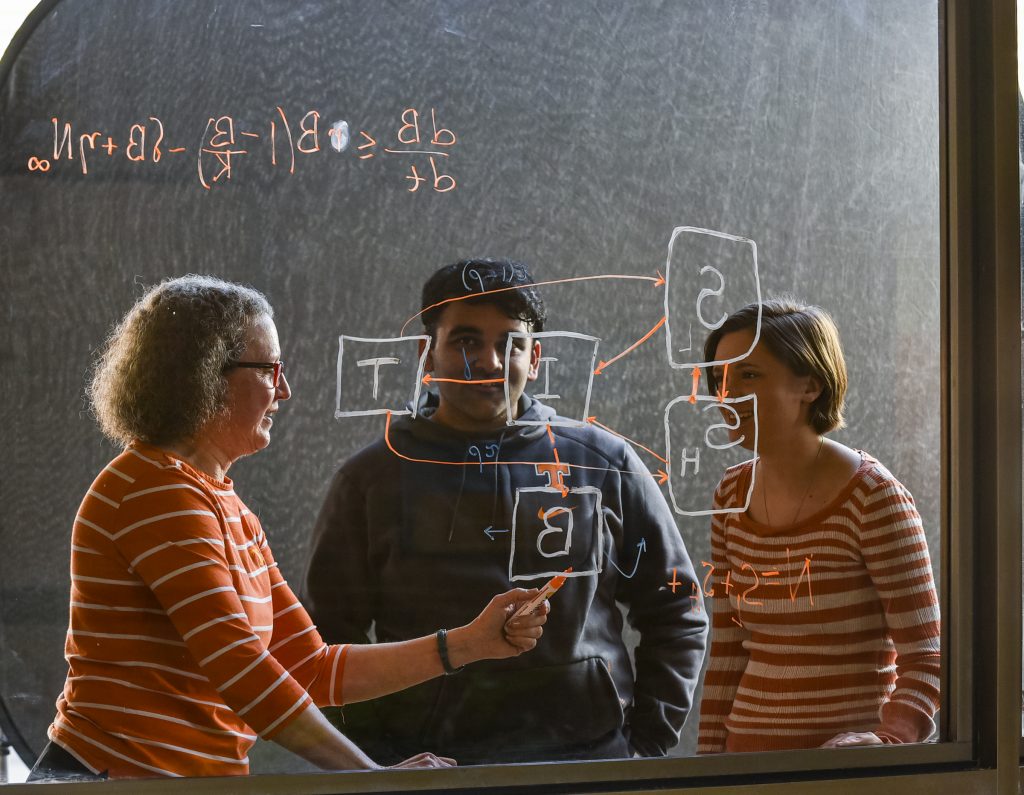
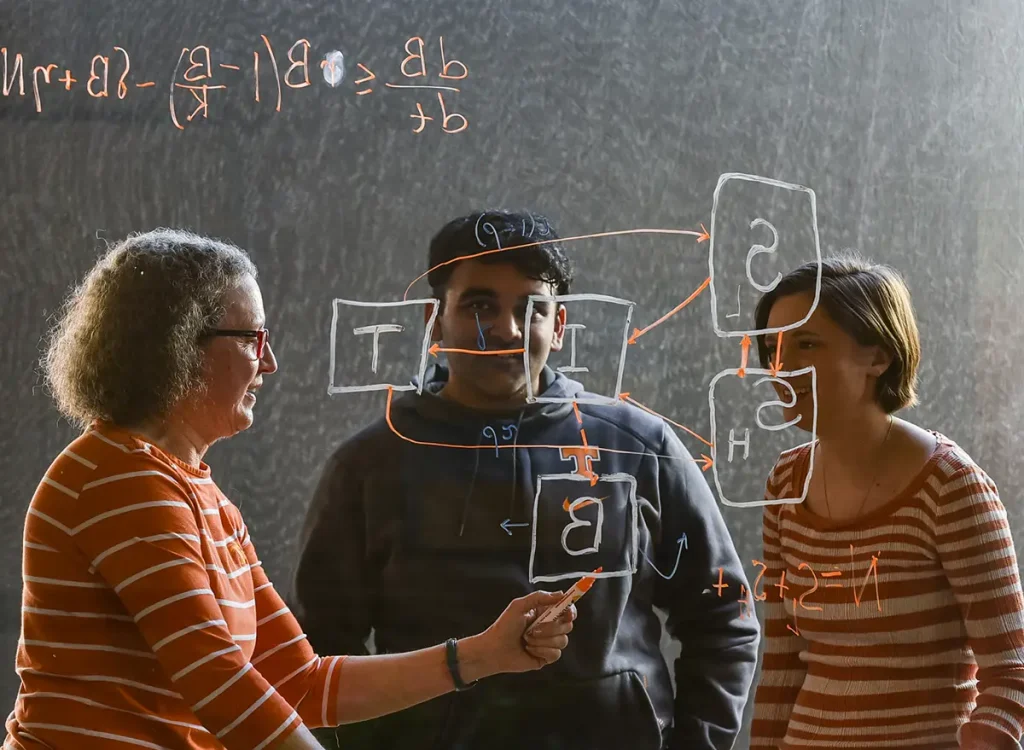
Suzanne Lenhart teaching students using a transparent glass pane with markers
Photo by Erik Campos

Suzanne Lenhart, Chancellor’s Professor in the Department of Mathematics, will join a storied list of honored speakers to deliver the Josiah Willard Gibbs Lecture at the world’s largest annual math gathering, the American Mathematics Society (AMS) Joint Mathematics Meetings (JMM2024), taking place January 3–6, 2024, in San Francisco.

JMM2024 brings researchers from 20 national and international partner associations to share the latest developments in mathematical thought and application.

Lenhart is the first UT professor to deliver the Gibbs lecture, which dates back to 1923. This annually awarded lectureship recognizes outstanding achievement in applied mathematics and shines a light for the public and the academic community on the contribution mathematics makes for contemporary thinking and culture.

The Gibbs lecture has previously been delivered by notable mathematicians like Robert May of Oxford University, Cathleen Morawetz of New York’s Courant Institute of Mathematical Sciences, Ingrid Daubechies from Princeton—and one particularly well-known name in mathematics history.

“Many famous mathematicians have given these lectures, even Albert Einstein,” said Lenhart. “I am very honored and excited.”

She thinks that delivering this year’s Gibbs lecture shows the UT math department’s support for strong researchers. Her presentation and connections made during the conference contribute to the department’s future growth.

“This talk may help to recruit some graduate students to our program,” she said. “I love going to this conference. I see a lot of friends and I meet a lot of research collaborators. It is usually a very big meeting, maybe 4,500 attendees.”

Lenhart’s lecture, “Natural System Management: A Mathematician’s Perspective,” explores how mathematical modeling can represent the population dynamics of a variety of natural systems, and how modeling guides methods for conscientious improvements in ecological management strategies.

“Mathematical modeling can provide decision support for managers and policy makers,” she said. “For example, mathematics can suggest management strategies for sustainable fishery harvest levels.”

Examples in her talk also include modeling applications for controlling rabies in raccoon populations, controlling wildfires in national parks, and personalizing therapy for those facing Alzheimer’s Disease. She also shows how modeling can guide ongoing and future conservation efforts.

“Sea turtles will have trouble surviving in the future due to high temperatures from climate change,” said Lenhart. “Math can directly suggest something—a strategy, or it could suggest that you’ve got to take some action.”

Her talk uses predictive models on how rising temperatures negatively affects Loggerhead sea turtle hatchlings’ survival ability, opening guidance for the types of conservation efforts needed to help the species.

Lenhart also organized a special session for JMM2024 in relation to her Gibbs lecture that will take place the same day. She will join 24 speakers from across the country to discuss “Dynamics and Management in Disease or Ecological Models.”

“I will attend several other talks, especially related to modeling in ecology or epidemiology,” she said. “I will also attend some panel sessions about science policy, since I am on the AMS Committee on Science Policy.”

Lenhart’s honor as the 2024 Gibbs lecturer and her ongoing engagement with AMS contribute to UT’s role on the forefront of mathematics that help us understand and improve life across the planet.

Filed Under: Featured

  • « Previous Page
  • 1
  • 2
  • 3
  • 4
  • 5
  • Next Page »

Department of Math

College of Arts and Sciences

227 Ayres Hall
1403 Circle Drive
Knoxville TN 37996-1320

Email: math_info@utk.edu

Phone: 865-974-2461

The University of Tennessee, Knoxville
Knoxville, Tennessee 37996
865-974-1000

The flagship campus of the University of Tennessee System and partner in the Tennessee Transfer Pathway.

ADA Privacy Safety Title IX